What We Build
DrivewaysHow We Build Them
A driveway carries the weight of every car, truck and delivery that comes to the house, through every freeze and thaw. Most driveways that sink, rut or spread were built on too little base. We build paver driveways, granite cobblestone aprons and pea stone or gravel driveways with cobblestone borders, all on a thick compacted base. Here is how, step by step.
Get a Free Estimate- 5-Star Rated on Google
- Licensed & Insured in MA
- 3D Design Before We Build
- All 15 Cape Cod Towns
Step 1
Plan the layout and the water
We walk the property first: how wide the driveway needs to be, where cars turn and park, where the driveway meets the street, and where the rain will go. Then we produce a custom 3D design of the finished driveway at your own house.
You approve the shape, the material and the borders before anything is dug.
Step 2
Dig out to firm ground
We excavate below the topsoil and anything organic, down to firm ground, across the whole driveway. Soft material left under a driveway is what turns into ruts and low spots after the first winter.
Step 3
A thick crushed concrete base
The base is compacted crushed concrete, the same material we use under our patios, but thicker, because a driveway carries cars instead of people. We compact it in layers so it stays level and firm under the weight.
The base is the part you never see and the part that decides how long the driveway lasts.
Step 4
A granite cobblestone apron at the street
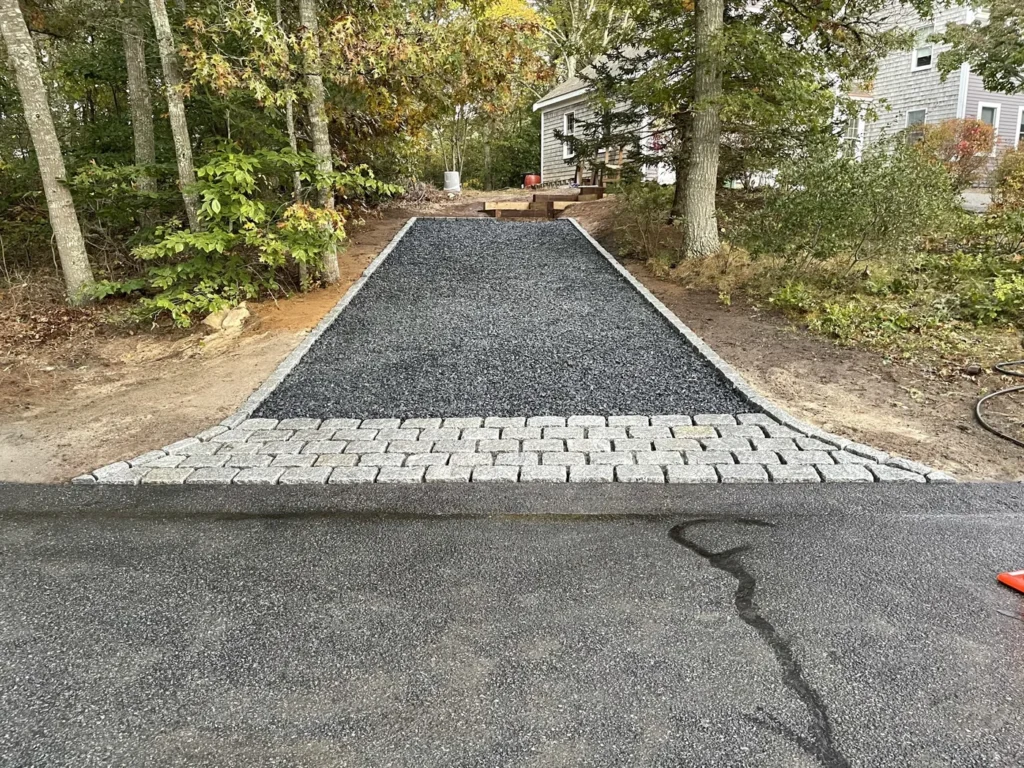
Where the driveway meets the road, we set a granite cobblestone apron. It takes the turning and braking at the street, keeps gravel from spreading onto the road, and gives the entrance a finished look.
Cobblestone borders along the sides hold the edges of the driveway in place.

Step 5
The surface: pavers or stone
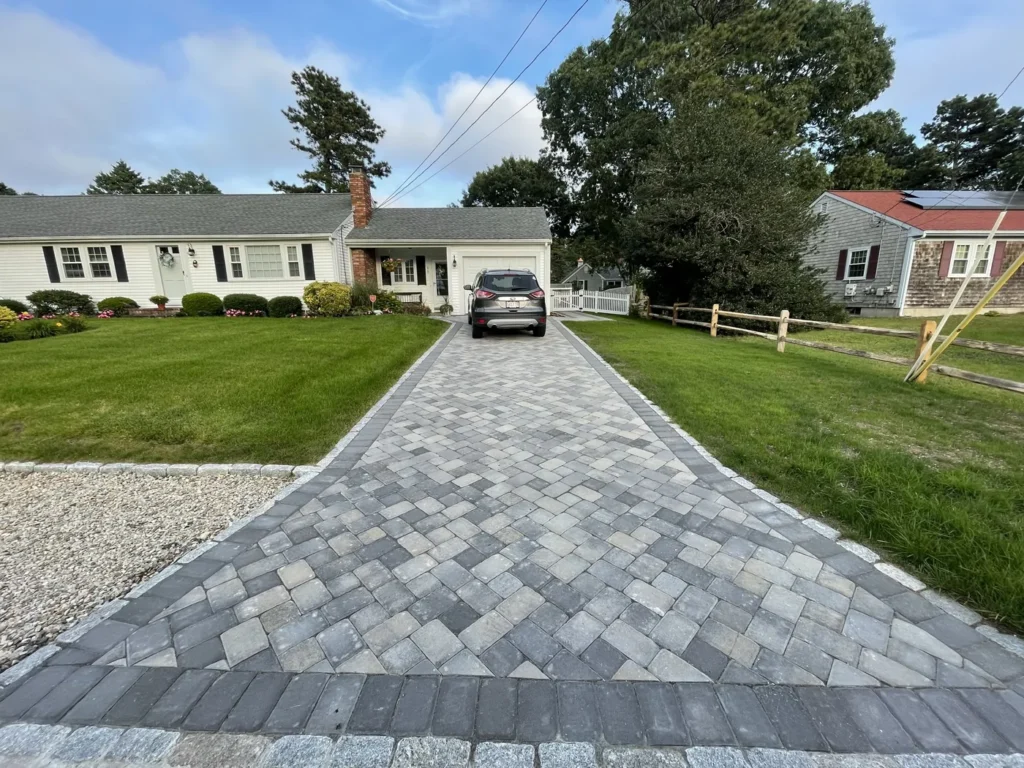
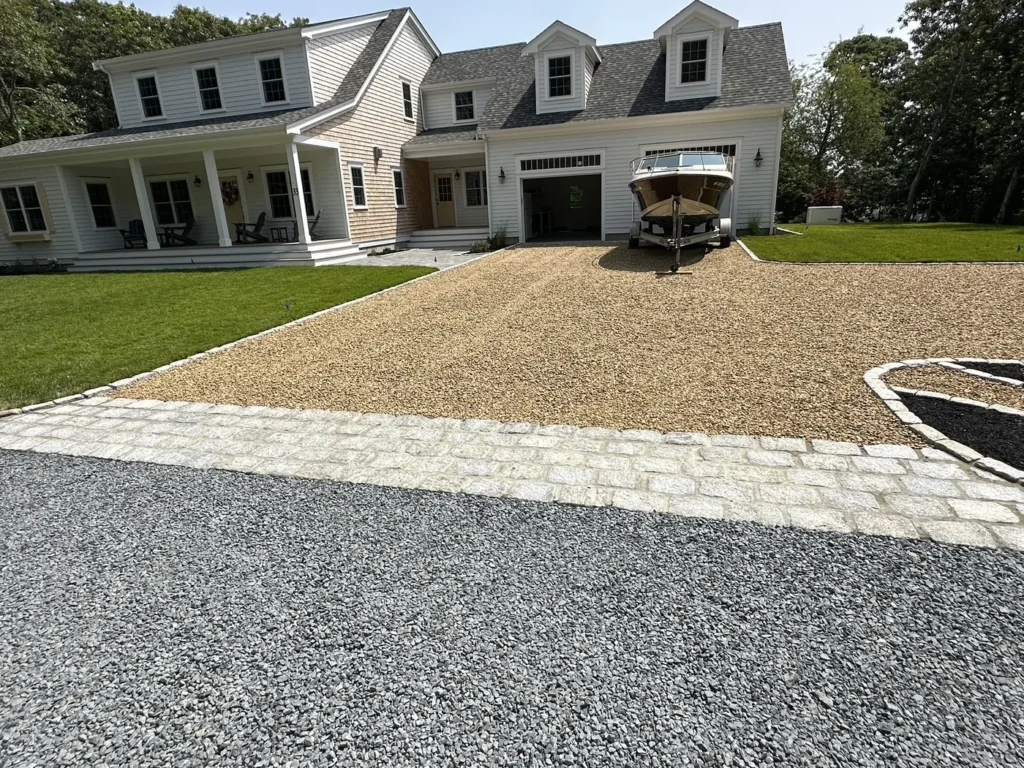
Paver driveways are laid tight in a pattern that locks together under the weight of a car, with the joints filled so they stay put. Pea stone and gravel driveways are spread and compacted over the same base, with cobblestone borders to keep the stone where it belongs.
We help you choose based on the look of the house, how the driveway is used and your budget.
Step 6
Grade, loam and clean-up
We grade the edges so water runs away from the driveway and the house, bring in loam and seed where we disturbed grass, and take the debris with us. On the last day it should look finished, not like a job that stopped.
Ask any contractor
Four questions worth asking
Whoever you hire, these four answers tell you most of what you need to know:
What is under the driveway?
Ask what the base is made of and how thick it is. A driveway needs more base than a patio, compacted in layers, over firm ground.
What holds the edges?
Without borders, pavers creep and gravel spreads into the lawn and the street. Cobblestone borders and an apron keep everything in place.
Where does the water go?
The driveway should be graded so water runs away from the house and does not sit in low spots.
Does work at the street need town approval?
Sometimes. Work at the road edge can need town approval, depending on the town and the road. You want that answer before the estimate, not halfway through the job.
Get in touch
Free driveway estimate
No commitment. We will respond within 24 hours and schedule a visit to your property within 48.
Get a Free EstimateMain: (508) 360-2151 · Office: (508) 373-3495
Masonry and hardscaping contractor serving all of Cape Cod, Massachusetts. Licensed and insured in MA.
(508) 360-2151(508) 373-3495contact@bridimasonryservices.comWhat We Build
- Custom Patios
- Pool Decks
- Walkways
- Stone Steps & Stairs
- Retaining Walls
- Cobblestone Aprons
- Chimney Repair
- Foundation Repair
- Fireplaces
- Driveways